


A great Deliberative Resistance can rebuild our broken system
Posted on June 9, 2026 in Uncategorized by Peter Ellis
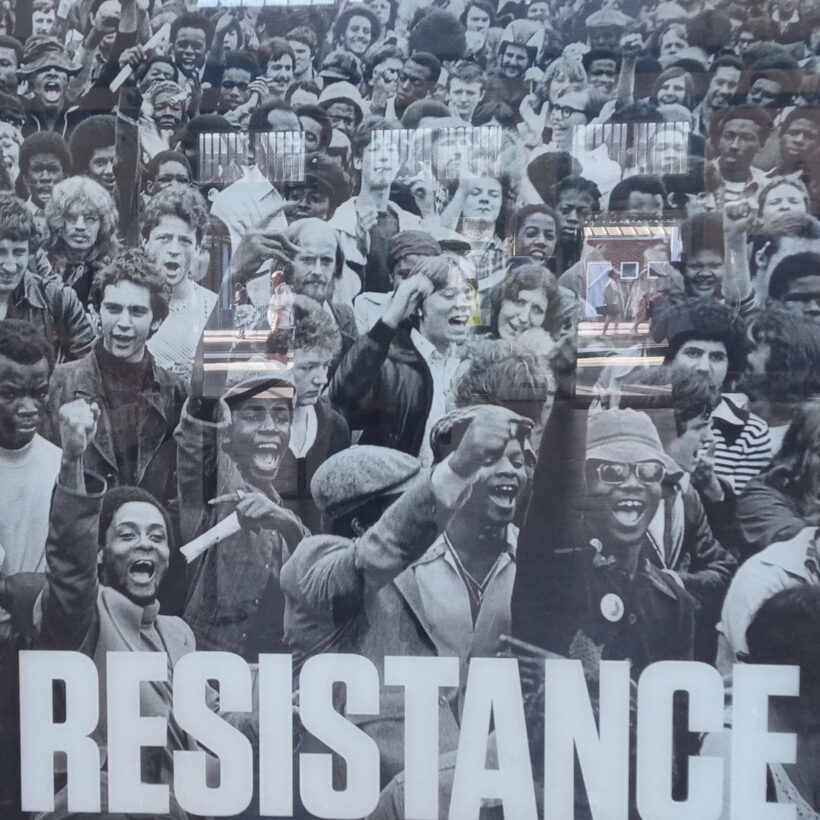
Those with prejudicial power are eroding human freedom. Hunkering down, fearful, many of us take refuge in our own safe circumstance, aghast at the suffering of those we see marginalised, killed and harmed.
The angry populist scream, which Michael Strain described as giving rise to a “style of politics in which truth and accuracy matter much less, corruption and self-dealing are normalised. Honest and open debate is undervalued, and rhetoric is coarse”, formed part of a two-way conversation between authoritarians, identifiably self-interested ultra-capitalists, and those who would support them, believing social difference was both a problem and one that they could exploit to reach power.
This authoritarian alliance included Christian nationalists, who, in the words of Doug Wilson, a US pastor with close ties to the Trump administration, see “a glorious opportunity to set the progressive agenda back half a century”. Their ambition is greater than that, it is to look for permanent, irreversible change.
Authoritarian politicians continue to embed their own self-interest in society, by abandoning a consensual system of capitalism, that itself is regressive and flawed, in favour of an extreme version, requiring them to dismantle the legal, civil and political structures which contain their arbitrary use of power.
Economic rights, as well as tolerant, plural values give form to human freedoms. The foundational values that govern the action of states and those who have economic power connect them and create a shared dependency. States too often act against the best interest of their own people or of those whose governments they wish to challenge. And capitalist self-interest monopolises our market economy and does not purpose it to build a fair society.
We are at a crossroads, yet progressive reformists and those who seek social and economic justice fail to signpost and coalesce around a collective direction of travel and framework for systemic change. The conversation progressives, reformists and those who believe in liberal democracy, should be having with the public is not taking place. Nor between one another; we converse in bunkers, too often reanalysing what fails, not signposting what can work in new ways. New ways to deal with old pain.
Change requires tolerance, built on humility.
The Four modern hierarchical Estates, of Institutionalised Religion, Politics, Capital ownership and Media, function interdependently. That interdependency and attachment to their foundational past, locks us into the current worldview. They can help start foundational reform helping the well-being of the fifth estate, the Commons, of the society of which we are all a part, but struggle to do so. Even where there may be a will, institutional dogma tethers us to an economy and politics which we know fails too many of us, too much of the time.
Authoritarians can disregard popular will, and progressive democrats prioritise winning a political term in office rather than applying their intellectual curiosity to achieve foundational, permanent change. Religious institutions, including the Church in the West, do not bridge the gap between their sacred teaching and secular reform which resonates with wider society based on that teaching.
This compelling adherence to legacy-thinking reflects the hand of parallel histories. The Lutheran inspired Christian reformation elevated the personal faith of each individual to be its benchmark of most significance. Its secular counterpart is still, that life chances, opportunity and economic rights attach to the individual also, embedded in society through an all-powerful capitalist framework. Personal status, taking precedence over universal progressive values, shared purpose and collective well-being.
These parallel views of a hierarchical humanity, founded on patriarchal privilege, lack collectivist expression. Following the reformation, European evangelism and colonialism followed twin paths, seeking conversion of the individual to save souls and conquest for profit. The church still evangelises the test of faith rather than the value of love. The market economy still serves personal self-interest rather than personal and collective well-being as its primary purpose.
In a recent article in the New Scientist, David Robson, examined resistance to change. Quoting Leo Tolstoy, that “the simplest thing cannot be made clear to the most intelligent man if he is firmly persuaded that he knows already”, he concluded that intellectual humility and actively seeking contradictions help us counteract the legacy-thinking which makes change difficult.
Institutional dogma and adherence to the status quo persists. Our progressive, academic, political, reformist and faith-based establishment have attached their credibility to the deceit that a fundamentally flawed system can work. Leading to a constant reanalysis of what fails focused on policies of mitigation, rather than a vision for universally impactful change.
The false dichotomy of ‘left’ v ‘right’ has obscured the politics of universal well-being, like our binary economy tethered between state and private sector when what would be most electorally persuasive would be to connect the best interest of consumers and wider society to the economy.
It is all but impossible to embed progressive values in society, when even progressives assume that there is no alternative to a capitalist framework. Meanwhile, the church is often too eager to evangelises the ‘world to come’ rather than doing the harder work of applying their values to articulate how they can build what they would identify as God’s will for love being established “on earth as it is in heaven”.
The Labour movement is letting itself and the people it looks to stand for down, not just successive leaders. Progressive reformers cannot present a credible vision for reform without any idea about how they need to restructure the economy. Perhaps in Andy Burnham’s “Manchesterism”, we see the seeds of collaborative, radical change emerging. Of societism on a developmental path, towards the establishment of a third sector, purposed to benefit consumers and wider society. Perhaps not.
But returning to humility and tolerance. The development of a societal framework is just my one vision, what is yours?
We need to deliberate in our politics and beyond it about HOW we build a fair society through new thinking; a new worldview.
In his Substack post, ‘People don’t know what they want’, Shutaro Aoyama observes that deliberative process fails because the process threw people who had not yet formed precise enough positions to negotiate with into processes that assumed they had. Of people who whilst seeking a common or consensual view, wanted different things. The people inside the deliberation, he concludes, need to own it.
So, we return to the societal /… ist essence of the significance of the individual and our collective, societal well-being. Because deliberation and collaboration to build a new framework based on a new worldview, depends on everyone owning the process, and coming to a view of how they conceive our humanity. Deciding in what way they would improve our politics and economics to build a fair society. We must share this process together.
Before long we need to start the great deliberation.
 Recent posts
- Building a Society-centred economy
- Affordable Essentials – A Fairer Economy in the first place
- Irrational Economics
- MAGA populism – Opportunity and Responsibility for liberalists, reformers and the ‘Left’
- And so…2024 teaches where 2025 can lead us
- An inaugural post – A call to action for a fairer future